What Is Ground Lease?
A ground lease is a long-term agreement, typically of 30 to 99 years, under which a tenant leases vacant land to construct a building or make significant improvements. In this arrangement, the tenant owns the building they construct, while the landlord retains ownership of the underlying land. Practically, what does ground lease mean is that the tenant pays monthly rent for the land, but finances and manages the construction independently. At the end of the lease term, ownership of all improvements usually reverts to the landowner, unless a renewal is negotiated. [1]
What Is Land Lease?
A land lease is a broader term that generally refers to an agreement where a tenant rents a plot of land for a specific use, such as agriculture, residential living (like mobile homes), or temporary commercial purposes. What does a land lease mean in this context is a more flexible arrangement compared to a ground lease. These leases often have shorter terms (ranging from 1 to 20 years) and typically restrict the tenant from making permanent, high-value improvements. The focus is on using the land “as is” rather than developing a permanent asset on it. [2]
Ground Lease vs Land Lease
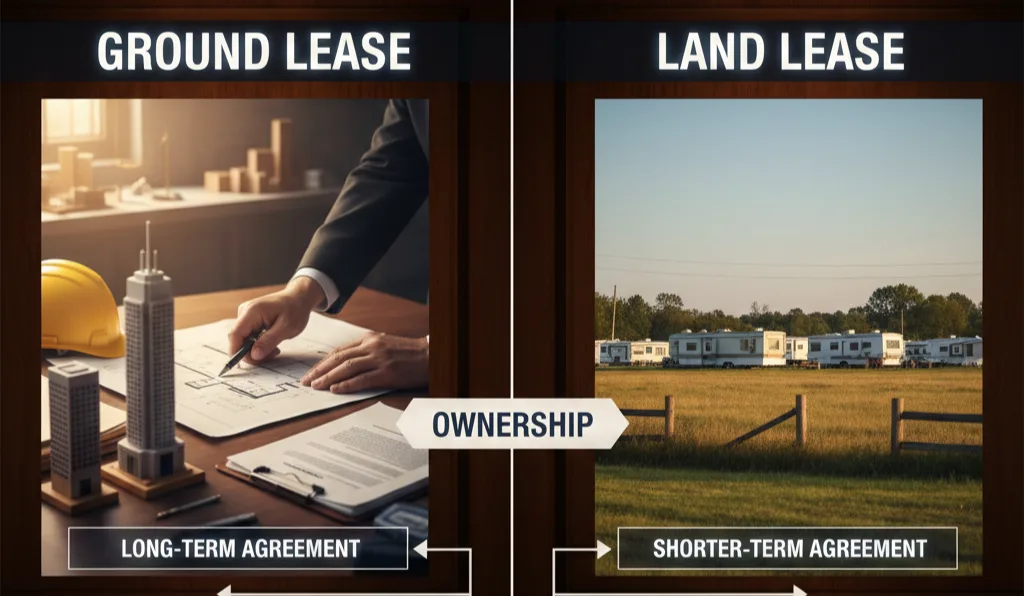
While both concepts involve renting land, their strategic applications differ significantly. Below is a comparison to clarify ground lease vs land lease dynamics. [3]
Unbeatable Price 5-Star Rated Partner! 2200+ Shades! Top Quality Paint Free Cancellation!
Get a rental agreement with doorstep delivery
Find the BEST deals and get unbelievable DISCOUNTS directly from builders!

5-Star rated painters, premium paints and services at the BEST PRICES!
| Feature | Ground Lease | Land Lease |
|---|---|---|
| Purpose and Typical Use | High-value commercial development (malls, hotels, offices). | Agriculture, residential parking, or temporary setups. |
| Lease Duration | Long-term (30 to 99 years). | Short to medium-term (1 to 20 years). |
| Development Rights | Extensive; tenant builds and owns structures. | Limited; usually minimal or pre-existing structures. |
| Ownership of Improvements | Tenant owns the building during the lease. | The landlord typically retains all ownership. |
| Common Industries / Applications | Real Estate Development, Retail, Hospitality. | Farming, Solar Farms, Mobile Home Parks. |
Key Features of a Ground Lease
Understanding the specific characteristics of a ground lease helps in evaluating its suitability for large-scale projects. [4]
- Long-term duration (often decades): Leases typically run for 30 to 99 years to allow investment recovery.
- Tenant builds and maintains improvements: The lessee is responsible for all construction and upkeep costs.
- Landlord retains land ownership: The lessor keeps the title to the soil itself throughout the term.
- Reversion of improvements at lease end: Buildings legally become the property of the landowner upon expiry.
- Common in commercial developments: Frequently used for malls, hotels, and corporate franchise locations.
Key Features of a Land Lease
A standard land lease offers several benefits, primarily flexibility and a lower capital commitment. (2)
- May be short- or medium-term: Durations are flexible, often ranging from just a few years to a couple of decades.
- Often used for agriculture or residential plots: Ideal for farming, seasonal use, or mobile housing communities.
- Limited or no permanent construction: Tenants usually do not build permanent concrete structures.
- Simpler agreement structure: Contracts are less complex and faster to execute than ground leases.
- Flexible usage depending on contract: Terms can be easily adjusted for different uses, like storage or parking.
Pros and Cons of Ground Lease vs Land Lease
Each leasing model has its own advantages and challenges, depending on your role as a landlord or tenant. [3]
Ground Lease
- Pros: Tenants enjoy a lower upfront cost by avoiding land purchase and gaining access to prime locations. Landlords get steady, long-term passive income without losing asset ownership.
- Cons: Tenants face complex financing hurdles and the eventual loss of their building (reversion). Landlords lose control over the land for decades.
Land Lease
- Pros: Agreements are simpler and quicker to finalize. Tenants have the flexibility to vacate or change land use without heavy capital loss.
- Cons: Tenants build no equity in the property and have limited rights to develop. Shorter terms offer less stability for long-term business planning.
When to Choose a Ground Lease vs Land Lease?
Selecting the right lease structure is critical to your project’s financial success.
- Commercial development projects: Choose a ground lease to build permanent assets such as hotels or shopping centers.
- Long-term investment strategies: Ground leases suit developers needing decades to amortize construction costs.
- Agricultural or temporary land use: Opt for a land lease for farming, seasonal markets, or vehicle storage.
- Budget and financing considerations: Ground leases help reduce upfront capital but require complex financing structures; land leases are cash-flow-friendly but offer no equity in the underlying asset.
How NoBroker Can Help With Ground Lease and Land Lease Agreements
Navigating the complexities of a lease agreement requires expert guidance. NoBroker assists property owners and tenants by offering specialized support for drafting both ground lease and land lease agreements. Our platform provides legally compliant documentation templates, supports negotiation, and offers end-to-end support for executing agreements. By connecting you directly with verified professionals, we help you understand a ground lease in depth and ensure your contracts are secure, all while saving you significant brokerage costs.
Frequently Asked Questions
Ans: A ground lease is a long-term agreement where a tenant leases land to construct a building, owning the building but not the land.
Ans: It refers to renting a plot of land for specific uses like agriculture or residential living, typically without ownership rights to any structures.
Ans: It depends on the goal. A ground lease is better suited to long-term commercial development, while a land lease is better suited to flexible, short-term use.
Ans: The tenant owns the building during the lease term. However, ownership typically reverts to the landowner upon lease expiration.
Ans: Yes, land leases can be renewed upon mutual agreement, but terms may be renegotiated, including rent amounts and duration.
Loved what you read? Share it with others!
ARTICLE SOURCES
- https://www.dhyeyalaw.in/concept-of-lease-under-the-transfer-of-property-act
- https://www.baymgmtgroup.com/blog/ground-lease-vs-land-lease/
- https://www.loopnet.com/cre-explained/investing/what-is-a-ground-lease/
 Author
Source link