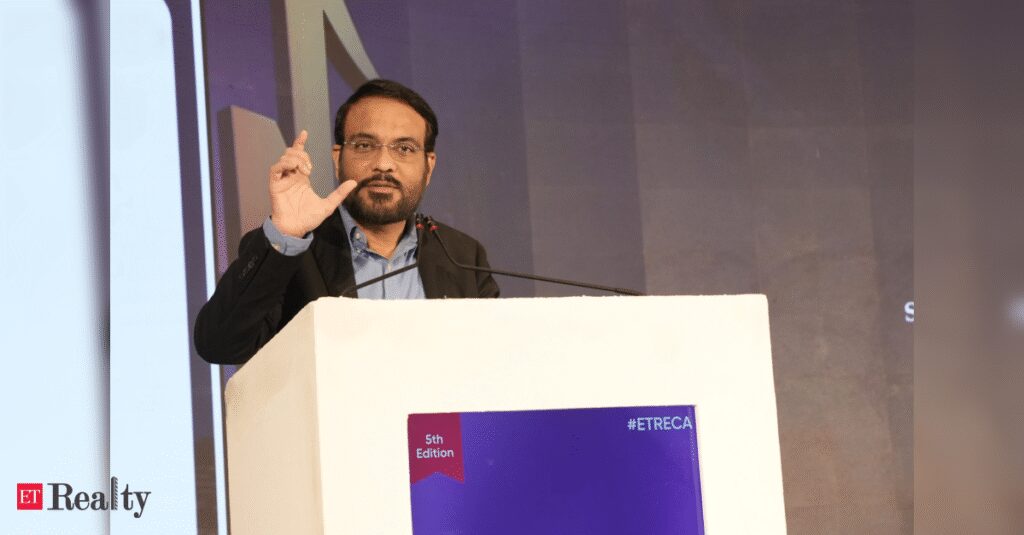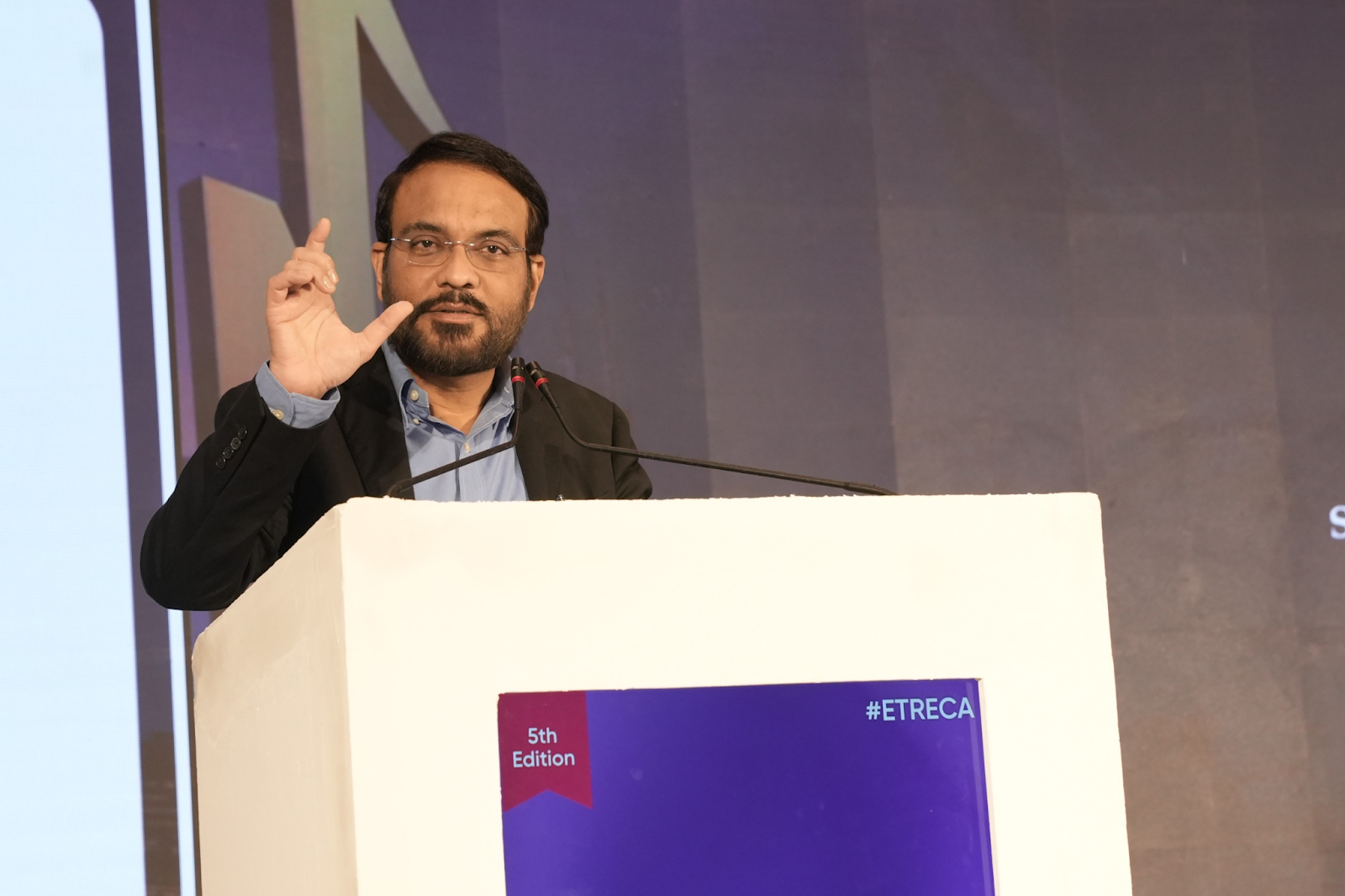
Addressing industry leaders at the ET Realty Real Estate Conclave 2026, Sanjeev Jaiswal (IAS), Vice-President and CEO of the Maharashtra Housing and Area Development Authority (MHADA), laid out a structural roadmap to tackle Mumbai’s deepening housing affordability crisis. With land scarcity, high premiums and redevelopment complexities shaping the city’s real estate landscape, Jaiswal positioned cluster redevelopment and policy reforms as central to the solution.Framing the core challenge, Jaiswal pointed to Mumbai’s shrinking land availability and rising housing costs.
“The affordability index of Mumbai is almost 50. It means that 50 per cent of a family’s income goes towards EMI if they buy a house,” he said, highlighting the disproportionate burden on middle-income and EWS/LIG segments. He added that rationalising premiums, development charges and taxes for affordable housing could significantly ease pricing pressures, noting that a calibrated reduction “can bring prices down by nearly 25 per cent”.
With nearly 90 per cent of the city’s developable land already utilised, MHADA is pivoting decisively towards cluster redevelopment.
“We are opening up 800 to 1,000 acres of land for cluster redevelopment — something that has never happened before,” said Jaiswal. Projects such as GTB Nagar and Abhyudaya Nagar are in advanced stages, while several other clusters are in the pipeline. The strategy, he explained, is to move beyond fragmented building-level redevelopment towards integrated layouts of 60–100 acres, creating “small townships within the city” with planned infrastructure and open spaces.
The authority has also aligned its redevelopment agenda with the state’s broader housing targets. Under Maharashtra’s growth strategy, 2.8 million affordable homes are to be built by 2030 across MMR, with MHADA taking responsibility for nearly 0.8 million units directly and indirectly through various schemes.
“In the last two-and-a-half years, nearly 50,000 houses have been delivered,” Jaiswal said, adding that 60–70 per cent of future supply will be driven by approved or pipeline cluster projects. As part of the sharing component under redevelopment models, MHADA expects to generate substantial housing stock for EWS and LIG categories in the next five to seven years.
Jaiswal also underscored the importance of connectivity-led growth, citing infrastructure upgrades such as metro corridors, the Navi Mumbai International Airport and emerging township models as catalysts that could rebalance demand across MMR. At the same time, he cautioned developers about supply-demand mismatches and unsold inventory risks.
“When supply increases to such an extent, demand may not match immediately,” he said, advocating a diversified housing strategy under the new 2025 housing policy, including rental housing, student accommodation, working women’s hostels and industrial housing.
In a direct appeal to developers, Jaiswal called for a more inclusive approach to housing creation. “Luxury housing will find its buyers. The real challenge is the middle class and those aspiring to own their first home,” he said. Urging builders to integrate a social component even within high-end projects, he added, “Even if you allocate 5–10 per cent for affordable segments, you may earn less margin, but you will earn the goodwill of the people”.
As Mumbai navigates redevelopment pressures, ageing cess buildings and expanding urban aspirations, MHADA’s cluster-led, policy-backed approach signals a shift from piecemeal interventions to integrated urban transformation. The success of this model, Jaiswal suggested, could determine how effectively the city balances growth with inclusivity in the decade ahead.