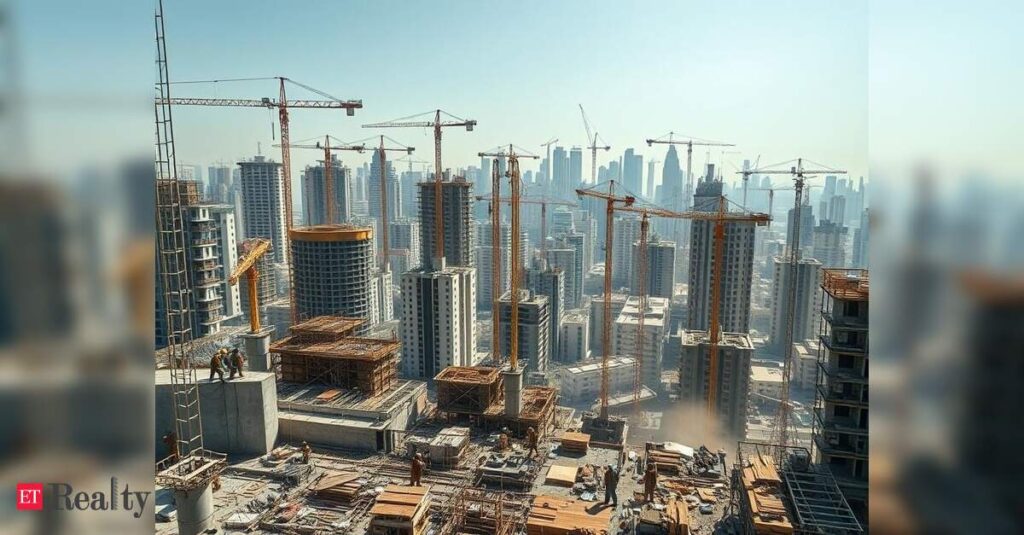
NEW DELHI: India’s building materials market is projected to expand to nearly $100 billion by 2030 from about $57 billion in FY25, driven by a 10–12% compound annual growth rate (CAGR) over the next five years, according to a report by Avendus Capital.
Among the segments, fast-moving electrical goods (FMEG) represents the largest opportunity, with a FY25 market size of ₹1,720 billion, expected to grow to ₹2,975 billion by FY30. Wires and cables are projected to record mid-teens growth, supported by grid modernisation, data centre expansion, EV infrastructure rollout and electronics manufacturing.
The paints and coatings segment, estimated at ₹850 billion in FY25, is expected to reach ₹1,350 billion by FY30, growing at 10–12% CAGR. The segment, which operates at 14-19% EBITDA margins, is witnessing heightened competition and premiumisation as large industrial players expand their presence.
Tiles and bathware, currently valued at ₹930 billion, is projected to grow to ₹1,670 billion by FY30 at an 11-13% CAGR. India has emerged as a significant exporter in this category, accounting for nearly 15% of global tile exports by volume, aided by product diversification and manufacturing scale.
The wood panels segment, estimated at ₹535 billion in FY25, is expected to reach ₹885 billion by FY30. MDF penetration has risen from 20% in FY20 to 30% in FY25 and is projected to approach 45% by FY30, reflecting increasing modularisation and shorter replacement cycles in residential interiors.
Plastic pipes, fittings and tanks, a ₹600 billion segment, is forecast to expand to ₹1,025 billion by FY30, with organised players accounting for nearly 70% of the market amid ongoing consolidation.
Furniture fittings and architectural hardware, though relatively smaller at ₹250 billion in FY25, is projected to grow at a faster 14-16% CAGR to ₹500 billion by FY30, driven by localisation, backward integration and regulatory tightening.
Koushik Bhattacharyya, managing director and head – industrials investment banking of the company said the sector is benefiting from rising consumer preference for branded, higher-quality products as homes are increasingly viewed as long-term lifestyle assets. He added that per capita consumption of building materials in India remains less than one-third of global averages, indicating significant headroom for expansion.