NEW DELHI: JK Lakshmi Cement is stepping up capacity additions to reach around 30 million tonnes per annum (MTPA) while staying anchored to its existing geographies—East, North and West—amid a fast-consolidating cement industry. The company is betting on a mix of integrated units, split grinding stations and rail-linked logistics to protect market relevance and improve operating efficiency, even as larger peers expand aggressively in its core regions.
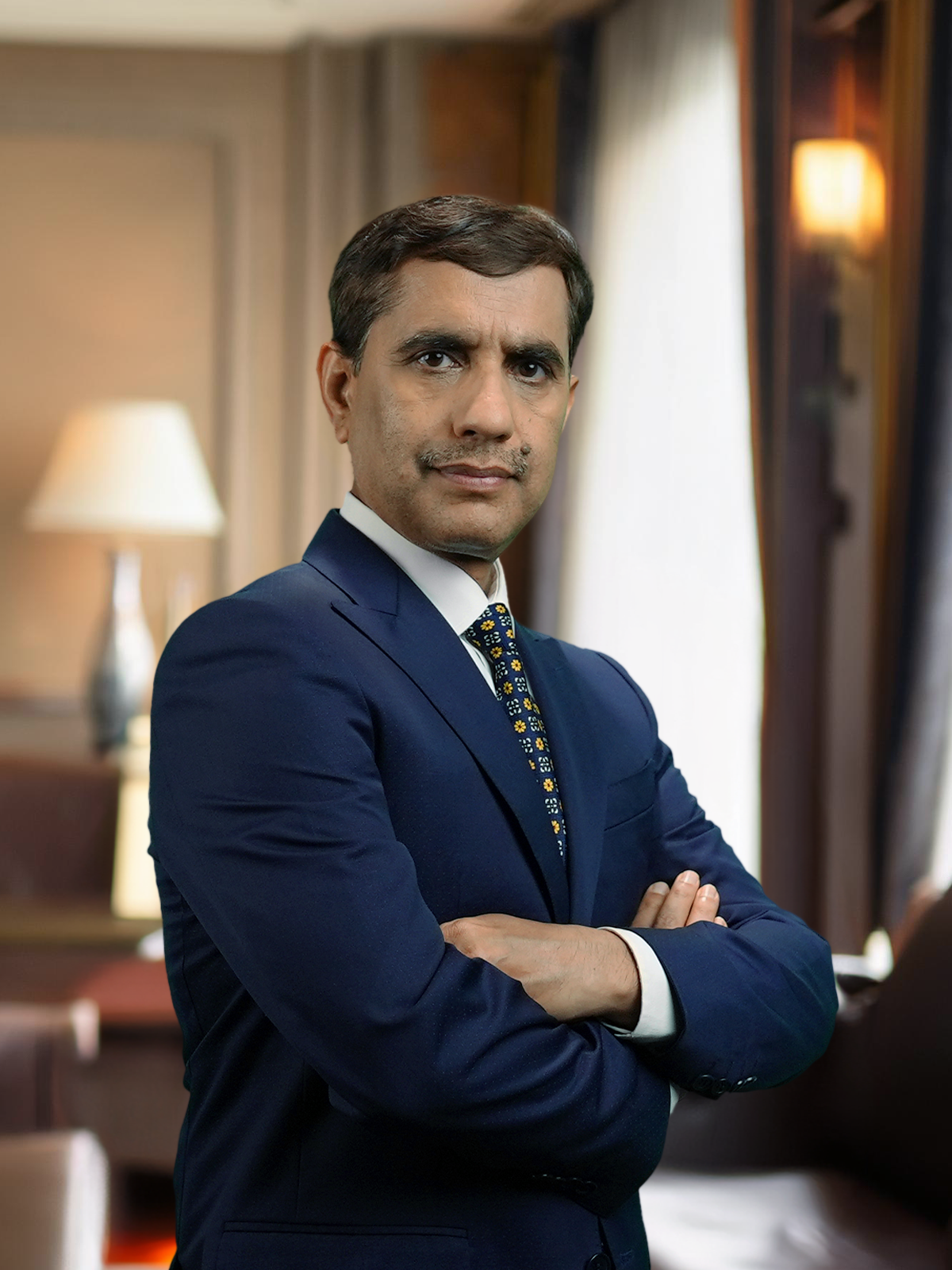
In an exclusive interaction with Ankit Sharma, Arun Kumar Shukla, president & director, JK Lakshmi Cement, said the company’s near-term focus remains on improving presence in markets where it already operates, tightening supply-chain costs, and pushing a higher share of premium products in the retail segment. He also addressed the Q3FY26 profit decline, pointing to a sharp fall in non-trade prices post GST-rate changes and weak demand, while flagging that prices should firm up as demand improves and input costs rise. Edited excerpts:
We have seen a lot of consolidation in the cement industry in the last two-three years, and you have also announced an expansion, taking capacity to around 30 MTPA. How are you looking at consolidation and competition?
Yes, now it comes around 30 MTPA totally. In our market, we are there in eastern, north and western parts of India. Consolidation is happening, but I think we have not been impacted. And this is a natural process also. Consolidation is not only bad in every sense.
Competitors are there, yes. We need to face them and we need to challenge them in the market, which we are doing. We are not really worried about what’s happening—who is going to what level. Our focus is to work on our philosophy of growing profitably.
We are at 18 million tonnes now. Our plan is to go to 30 million tonnes. Our plan is to improve our efficiency and really challenge our competitors in the market and compete with them, big or small, I think that doesn’t matter, and serve our customers, give them value proposition, give them good product. This is what our focus is.
At 30 MTPA, you could be around the seventh or eighth position. With larger competitors, do you find it difficult to remain relevant?
If you look at our strategy, it is to improve our presence in our existing markets only. We are growing in the East where we are already there. We are a formidable player in the East where we operate.
If you look at Rajasthan, we already have 10 million tonnes out there. We are one of the biggest players in Rajasthan itself. If you go to Gujarat, we have two grinding stations with a capacity of about 3.5 million tonnes.
Our strategy is to be relevant wherever we operate. We don’t believe in spreading thin. Wherever we are there, we want to be a formidable and relevant player and that is the strategy we are going to pursue.
UltraTech and Adani are also pushing strongly into North and West. How does that impact you and what is your plan to protect your presence?
I think again, go by the basics. We do have a plan to expand ourselves in North. In Nagaur, we have two mining leases with us. We are going to put up clinker and grinding facilities there at Nagaur and other locations. That’s the plan we have. That way, we are going to preserve our presence and capacities in that market.
In the West also, where people are trying to grow, we have mining leases in Kutch, Gujarat. We are going to put a power plant, an integrated unit, and some split-location grinding station.
How many mining leases do you have?
We have one mining lease in Kutch, and two in Nagaur.
In Q3 FY26, net profit fell around 24-25%, even though volumes rose 8%. What was the reason?
Volume-wise, we have done well. As I said, some of our markets where we are present, post GST reduction, non-trade prices fell down drastically because demand was low and everybody tried to push in that segment. So non-trade prices fell quite substantially, and that impacted us.
But on volumes, I think we have been able to protect our markets and in fact, we increased our market share. And that was a very temporary phenomenon, not a big issue.
From this quarter onward, I think things are going to be better in terms of demand. Since costs have also gone up, petcoke and coal prices also will follow. Institutional segment prices have gone up; even trade segment will go up because demand is supporting and cost has increased. So I think we will have to make that up.
You revised the Durg expansion capex upwards to about ₹3,000 crore, with a 70% debt funding model. Is this the right time to leverage the balance sheet?
If you look at our net debt-to-EBITDA, we are quite comfortable now. This ₹3,000 crore capex is good because we are going to put up one integrated unit at Durg along with grinding and three split grinding locations, which will help us protect our markets.
In the East, we have exhausted our capacity. We are almost running 100% capacity in the East. So we have to do that expansion anyway. If you want to be relevant and formidable in the market, then you have to have capacity.
Why was the capex revised upward from about ₹2,500 crore to ₹3,000 crore?
Because we added some facilities like a wagon tippler, railway siding, because that gives us advantage and we moved the pre-heater from five-stage to six-stage. These things contributed to revisiting our capex from ₹2,500 crore to ₹3,000 crore.
Post Udaipur Cement merger, what timeline are you targeting for the ₹120 per tonne cost savings you’ve spoken about?
We have been working on three-four elements. One is renewable energy, we are at 48%. Plan is to go to 52%. Second is working on our supply chain, reducing lead and reducing logistics cost.
Third is working on premium products and improving our top line. Fourth is using digital to improve efficiency in our pyro process.
These are the four levers and all of them are at different stages of completion. Pyro process, we are going to launch that project in this month only. Last time I said it is going to take about 18 to 24 months to realise the benefit of about ₹120 per tonne.
On alternate fuels, your thermal substitution rate (TSR) is still relatively low. How do you justify the pace?
Our thermal substitution rate is about 9%. We have constraint of availability of alternate fuel like RDF and things like that. If you go to the South, you have an evolved ecosystem. But in North and Eastern India, it comes down to economics, the gap between conventional fuel and AFR and availability. These are the two things, nothing else.
Yes, it will increase in the next one-two years. TSR is going to be one of the drivers of the ₹120 per ton.
You said non-trade sales rose above 50%. Is this a permanent shift?
No, this was temporary. I mentioned earlier, demand was low, prices fell, that was a temporary phenomenon. We will go back to our original level of about 55-45 kind of mix.
You spoke about lead distance. What is it now and what is the ideal level?
Last quarter, it is 380 km—reduced by 15 km. Ideal, our plan is to go to about 365–370 km.
You are investing about ₹325 crore in Durg for railway siding. Is there a delay, and does it impact outcomes?
The job within our part is already accomplished. Some jobs we have to do with Steel Authority of India, like strengthening the track and where track is crossing the state road, we have to work with PWD. That is getting delayed because of those things, but that is in no way impeding our outcome. No way.
You’re increasing premium product share (you mentioned it has increased to 26%). Are contractors and developers ready to pay for premium cement?
Premium product we are pitching in our B2C segment-end users. We are not going to contractor, developer or builder because this is a costly product. They believe in cheaper product because they have cost targets.
But my belief is, if they use this product, the overall acquisition cost is going to be lower than what they assume. In their perception, it increases cost. So premium product is B2C only through channels and end users who understand the value. Home builders look for durability, strength and overall cost benefit.
With the 12 MTPA expansion, how do you prevent logistics from eroding margins?
In fact, this will give us benefit in logistics cost. For example, if we put up our plant in North Rajasthan, which is being catered from South Rajasthan, that will reduce overall lead.
If we put up a plant in Kutch, today we are servicing Kutch from our Sirohi and Udaipur plants, Kutch plant will cater to nearby area and reduce cost. So logistics will not increase; it will reduce.
More so because railway siding, we are putting up that will give benefit of reducing overall logistics. All new locations, we are going to have railway siding.
You mentioned Swiss experts and institutions in the development of a new product. What role did they play? And what was the role of TARA?
This product is a Limestone Calcined Clay Cement (LC3) variant, which uses a blend of clinker, calcined clay and limestone (with gypsum) to reduce clinker intensity while maintaining performance. The work started about a decade ago after a Swiss academic, professor Karen Scrivener, encouraged us to explore the LC3 route.
Swiss institutions then supported the technical development as a know-how and testing partner. In the early stages, we sent multiple samples to Lausanne for lab validation, different combinations and formulations were evaluated and the Swiss ecosystem, including the Swiss embassy, was involved in facilitating this collaboration.
TARA helped us bridge the on-ground gap in India. Since we cannot run every iteration in Switzerland, we worked with TARA for local testing and for identifying suitable material sources, particularly limestone and clay, so the formulation can be manufactured with Indian raw materials. We have already identified resource locations in Rajasthan and Gujarat.
How much carbon emission reduction will this product deliver?
The product can deliver up to about 40% lower CO₂ emissions, largely because the clinker component is reduced and replaced with calcined clay and limestone. Our reference point is ordinary Portland cement (OPC), the intent is to deliver OPC-grade strength benchmarks, including 43-grade equivalence, with a lower-carbon blend.
Broadly, the carbon reduction tracks the clinker reduction: lower clinker means proportionately lower process emissions.
What kind of share do you expect for this product in your portfolio over time?
Commercial dispatches of Green PRO LC3 will begin in February 2026 to Rajasthan. Additional phases of market rollout will follow based on institutional demand and regional requirements. This segment can grow at about 5–6%. Since we are one of the first to move on this journey, we will take advantage. Initial feedback from customers is very good, but you have to assess and it will take time. I will not promise that it will go to a very high level of volume.
We are looking at three years’ time, maybe about 5-7% of overall.