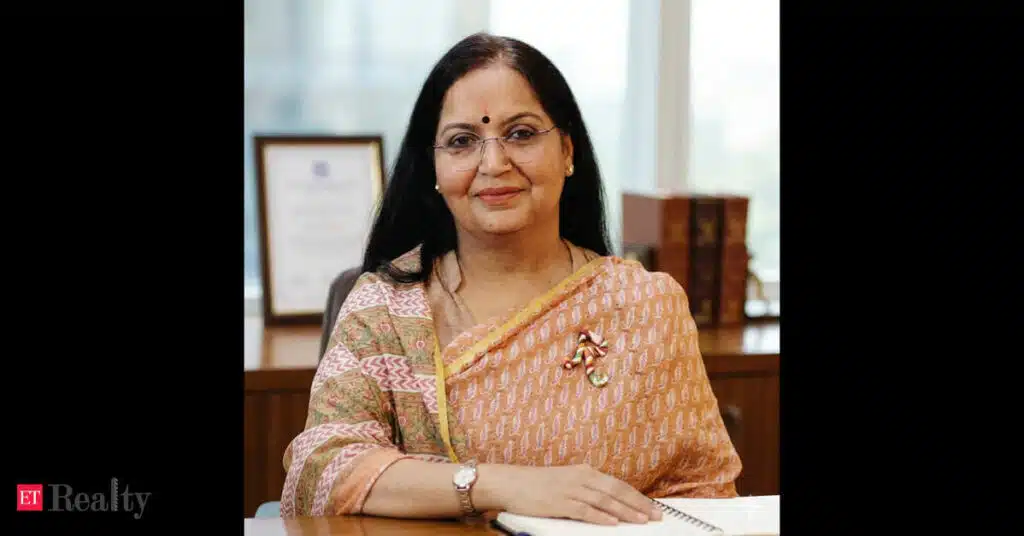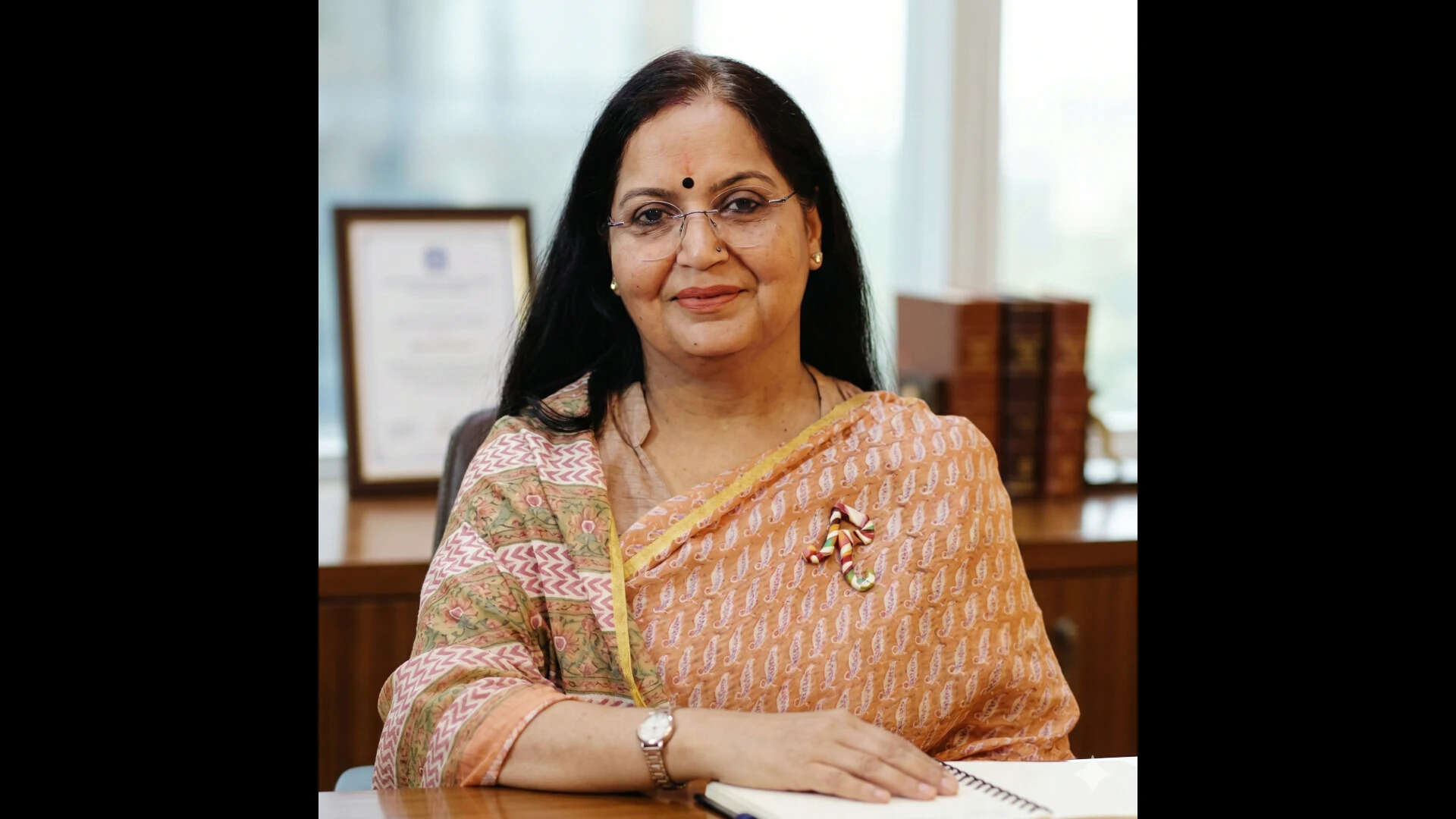
JAIPUR: The Rajasthan Housing Board (RHB) has more than tripled its revenue in FY26 to over ₹1,000 crore, driven primarily by commercial auctions and improved asset monetisation, commissioner Rashmi Sharma said in an exclusive interaction with Ankit Sharma.
The autonomous housing body, which caters largely to affordable and mid-income segments, is now preparing a fresh pipeline of residential schemes across Jaisalmer, Jodhpur, Alwar, the NCR belt near Bhiwadi, and select emerging towns in the state. The board is also evaluating new development models, including possible private participation, as it seeks to expand capacity while maintaining affordability. Edited excerpts:
How was 2025 for the Rajasthan Housing Board in terms of new launches and response?
FY25 was a strong year for us. We launched around 14 new schemes, which is a significant number after a gap. The response was encouraging, not only in Jaipur but also in smaller districts such as Barmer, Baran, Dholpur, Bhiwadi, Alwar and Udaipur. This reflects continued confidence among homebuyers in Housing Board projects.
Were most launches Jaipur-centric or spread across smaller towns as well?
Jaipur offers a wider product mix across EWS, LIG, MIG and HIG categories, including some premium offerings. However, our focus is not limited to Jaipur. We are equally committed to smaller districts and townships. The recent schemes were geographically diversified and received good demand across segments.
What are the plans for 2026, residential or commercial focus?
Our primary mandate remains residential housing across income categories. However, commercial development is integral to our self-sustaining model. When we plan a colony, we also create supporting infrastructure, roads, sewerage, electrification and community facilities. Alongside this, we develop commercial pockets, which are auctioned to generate revenue.
In FY25, commercial auctions performed strongly and helped us significantly improve our revenue position.
You mentioned revenue growth. What numbers are we looking at?
In FY25, our revenue was around ₹300 crore-plus. In FY26, we have already crossed ₹1,000 crore. The growth has largely been driven by commercial auctions and better monetisation of assets.
How many new schemes are planned for 2026?
We are currently in the planning stage. We have identified land parcels in Jaisalmer, Jodhpur and around Pushkar. We are also looking at Kotputli and areas in the NCR belt such as Bhiwadi, Khori Kalan and Shahjahanpur. There are proposals for Alwar city as well. Some launches are ready in the pipeline, while others are under planning.
There was up to a 26% land price revision. Has that impacted affordability?
The revision needs to be seen in context. There have been cost escalations across the industry, including land, construction materials and other development inputs. Compared with private developers and prevailing market rates, the increase on our end is relatively moderate.
It is also important to clarify that this is not a blanket hike. The housing board follows an annual review process, where a dedicated accounts team evaluates scheme-wise costs based on the stage of development. The revision varies across projects. For instance, in a fully developed scheme in Jodhpur, the increase may be minimal. In areas like Pratap Nagar, where development is still underway, the revision could be on the higher side.
Even after these adjustments, our pricing remains competitive and among the most affordable in the market. For higher-value categories, the board has also increased the number of payment instalments, from five or seven earlier to nine, to ease the financial burden on buyers.
Is the board moving towards premium housing?
No. Since inception, RHB has delivered approximately 2.65 lakh homes, with a significant share in the EWS and LIG categories. Premium projects may receive more visibility, especially in Jaipur, but our mandate remains inclusive housing.
Are you considering inviting private developers to develop Rajasthan Housing Board land parcels? What is the strategy?
Traditionally, the housing board operates through its land bank, either by acquiring land directly or receiving land from government bodies. We then undertake planning and development ourselves in a phased and structured manner.
Over the years, we have adopted different execution models. Apart from in-house development, we have also implemented projects through the EPC route, where projects are bid out and executed end-to-end by contractors. Some of our recent housing projects and mixed-use developments, including those with integrated commercial components, have been delivered through this model.
However, given resource constraints and the need to scale up, we are evaluating additional options. There has been a suggestion at the state leadership level to explore collaborative models beyond the traditional framework. We are considering a stakeholder consultation process to examine structured partnerships, where identified land parcels could be developed under the RHB umbrella, with clearly defined sharing mechanisms between the board and private developers.
At present, no land bank has been formally opened for private participation. A few parcels have been identified for potential exploration, but any such move will be taken up only after detailed consultation and approval at the appropriate level. This would represent a strategic shift, not a departure from our mandate, but an innovation aimed at expanding capacity while retaining institutional oversight.
There have been concerns about stagnant inventory. What strategy is RHB adopting?
Addressing unsold inventory has been a priority for us. Over the past few months, we have significantly reduced the backlog through focused efforts.
We organised targeted outreach camps and adopted a 360-degree marketing approach in areas where inventory was pending. In addition, these properties are being regularly listed under our weekly ‘Budhwar Neelami’ (Wednesday auction) platform, along with on-ground camps to improve buyer engagement.
For older or dilapidated units that remained unsold due to various reasons, we are reviewing options on a case-by-case basis. Where necessary, price rationalisation or other corrective measures are being considered to facilitate quicker disposal. The objective is to ensure productive utilisation of assets while maintaining transparency in the process.
You are planning to create an enforcement wing to curb encroachments. What is the status and timeline?
The proposal for an enforcement wing has been under consideration for some time. There have been observations in the past, including directions at various levels, that the Housing Board should strengthen its mechanism to safeguard its land parcels.
At present, our field officers remain vigilant, but enforcement often requires support from the district administration and police authorities. Since we do not have an independent enforcement or constabulary setup, action can sometimes be procedural and time-consuming. In certain cases, delays may create room for encroachments.
To address this structurally, we are preparing a proposal to create designated posts for an enforcement wing. The proposal will be routed through the government and sent to the Finance Department for necessary approvals. This is aimed at institutional strengthening and better protection of Housing Board assets.
We are hopeful that the formation of this wing can move forward within the next financial year, subject to approvals.